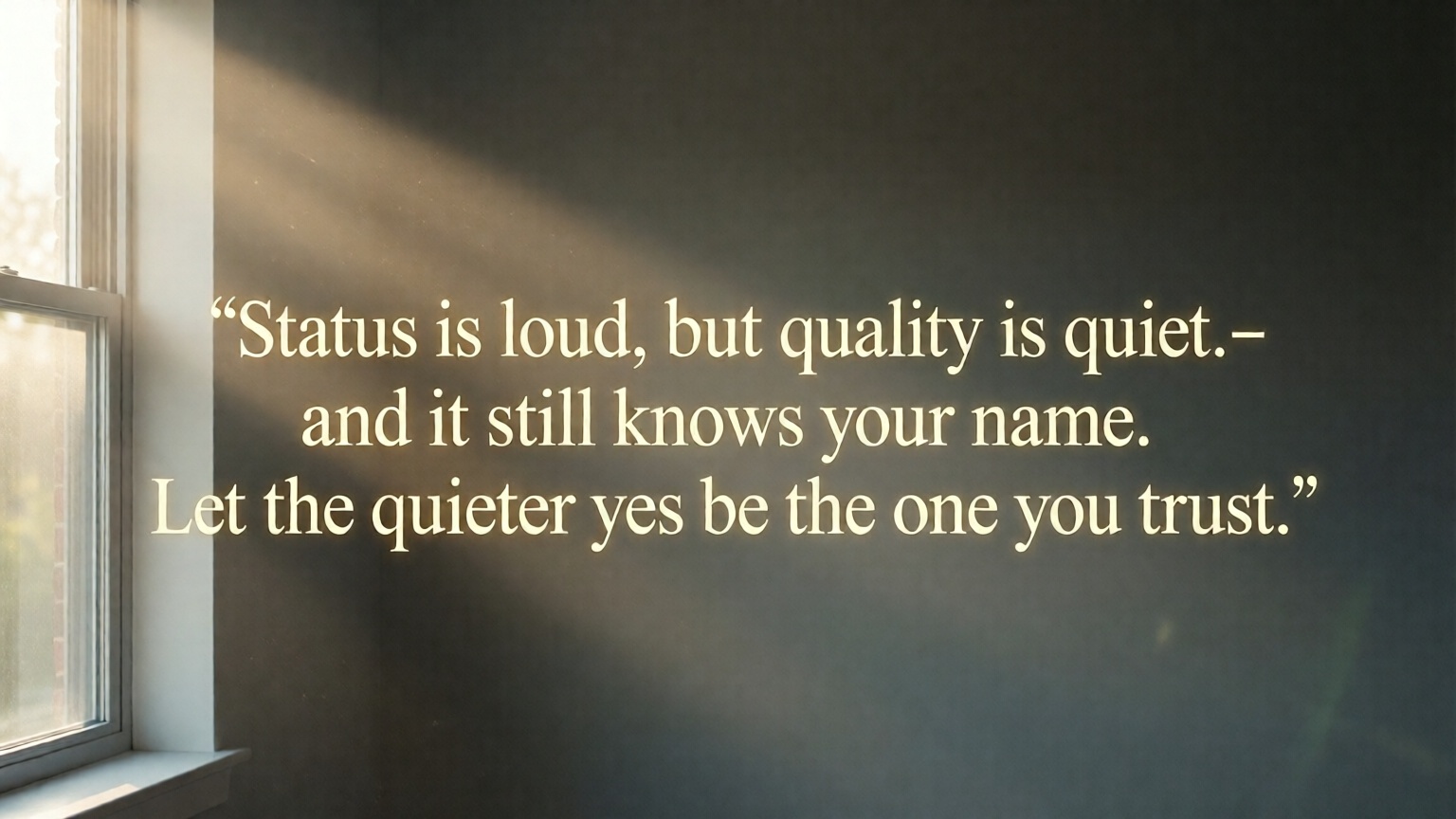
"Status is loud, but quality is quiet—and it still knows your name. Let the quieter yes be the one you trust."
Consider how often a desire changes once you imagine someone else applauding it. What if the cleanest way to tell what you truly want is to ask: would this still feel good if no one ever knew you chose it? Notice which wants arrive with a deep exhale, and which ones need an audience to make sense.
If the clearest desires are the ones that still feel right without applause, the same question can steady us as readers, too: would this story feel trustworthy if no one had to “perform” credibility? That’s the tension surfacing as AI quietly joins the newsroom—often without saying so.
A new study looked across a vast slice of American journalism—186,000 articles from 1,500 newspapers—and found something both unsurprising and strangely intimate: AI is already in the room. Roughly 9% of newly published articles showed signs of being partially or fully AI-generated, with the pattern appearing more often in smaller, local outlets and in certain topic areas. What stands out isn’t only the presence of AI, but the quietness around it: disclosure is rare.
Consider what that means for the reader’s nervous system. News is one of the places we go to borrow a little certainty—something that says, “This happened. This matters. Here’s what we know.” When the method behind the message is hidden, we can feel the ground shift under our feet, even if the words themselves sound perfectly confident. Maybe the issue isn’t that AI is used, but that we’re asked to trust without being told what kind of trust we’re being asked for.
And yet, there’s another side that deserves air. Local newsrooms are stretched thin, budgets are tighter than ever, and the work of keeping a community informed can be painfully unglamorous. AI tools might help a small staff cover routine updates, translate information faster, or turn public records into something readable. What if, used carefully and named honestly, AI could protect the quiet quality of journalism—making it more consistent, not more performative?
Today’s principle asks us to choose quality over status—the quieter yes over the headline-grabbing gesture. Maybe news organizations are being invited into that same choice: not to chase the appearance of productivity, but to build the kind of transparency that doesn’t need applause to be real. As you read today, you might ask: what makes me exhale and feel grounded—more output, or more honesty? And what would it look like if “quality” in the AI era sounded less like certainty, and more like clearly stated sources, visible process, and a willingness to say, “Here’s how we made this.”
Consider a “no-audience” check-in: if no one could see or measure this choice, would you still want it? Notice where your mind reaches for impressing, and gently ask, “What would feel quietly nourishing instead?” You might try naming one small “quality cue” for today—more ease, more clarity, more presence—and let that guide the next decision.
We looked at how status can fill the room—especially now that even our headlines are getting louder with AI—but quality still shows up with care and truth. As we choose Quality Over Status, we can trust the quieter yes that feels steady. And that brings us to a gentler kind of ambition.