Community, Not Competition
A hundred likes still can't hug you back.
What if all that performing—the highlight reel, the curated feed—leaves you counted but never really known? Maybe genuine connection was never about being impressive, only about being present. You're allowed to be seen instead of watched.
Meta Says Its AI Moderators Beat Humans — But Users Report Wrongful Bans · source →
It's a strange ache — to be measured constantly yet rarely met. This week, Meta offered a quiet illustration of what happens when we become numbers in someone else's system rather than people known by name.
Meta announced that its AI moderation system now outperforms human reviewers, producing 13% fewer errors and catching 10% more policy violations. On paper, it's a genuine improvement — the kind of statistical win that looks clean and unarguable from a distance. But the same week the numbers arrived, so did the stories: Instagram and Facebook users who woke up to find their accounts gone, their years of photos and messages and communities erased by a decision no human had made and no human seemed able to reverse.
What if this is the hidden cost of being counted at scale? A system can be 'better on average' and still be catastrophically wrong for the person standing in front of it. To the algorithm, a wrongful ban is a rounding error — a fraction of a percent absorbed into an otherwise impressive report. To the person locked out, it's the sudden loss of the small digital room where their friends, their livelihood, or their sense of belonging lived. Accuracy, it turns out, is not the same as being understood.
Maybe that's the quiet lesson underneath the headline. These platforms promised connection, then optimized for something adjacent to it — engagement measured, behavior scored, presence flattened into a signal that either passes or fails. When the moderator is a model tuned to averages, you are no longer a neighbor to be known; you are a data point to be classified. The performing, the following, the endless being-watched — none of it protects you from being misread by a machine that never actually saw you.
Consider what it would mean to hold your real connections a little more loosely from these systems. The people who would notice if you disappeared — who would text, who would ask, who would show up — were never counting your likes. A follower total can vanish with a false-positive flag; a friend who knows your voice cannot. Perhaps the invitation here is gentle and practical: to keep something of yourself off the ledger entirely, tended in the rooms where you are recognized rather than merely processed. You're allowed to be seen instead of watched — and no moderation model, however accurate, can grant or revoke that.
This week, Meta told us its machines have gotten better at judging us — 13% fewer errors, a cleaner report from a comfortable distance. But the people who woke up locked out of their own accounts, their photos and communities erased by a decision no human made, remind us of something the numbers can't hold: accuracy is not the same as being understood. To a system tuned for averages, you are a signal that passes or fails. To the people who love you, you are irreplaceable. Here's the quiet truth underneath the headline — the friends who would notice if you disappeared were never counting your likes. They know your voice, your laugh, the particular way you show up. That kind of knowing can't be flagged, banned, or absorbed into a rounding error.
Internal · Mindset
Consider the next person you might silently size up today—the colleague, the stranger, the friend whose life looks effortless online. What shifts if you imagine them not as someone ahead of or behind you, but as a fellow traveler on the same road? You might notice how much lighter it feels to wish them well rather than measure yourself against them.
Photo of Happy Memory
A printed photo that reminds you of a joyful moment and brings comfort.
Keep on your desk or nightstand where you can see it daily.
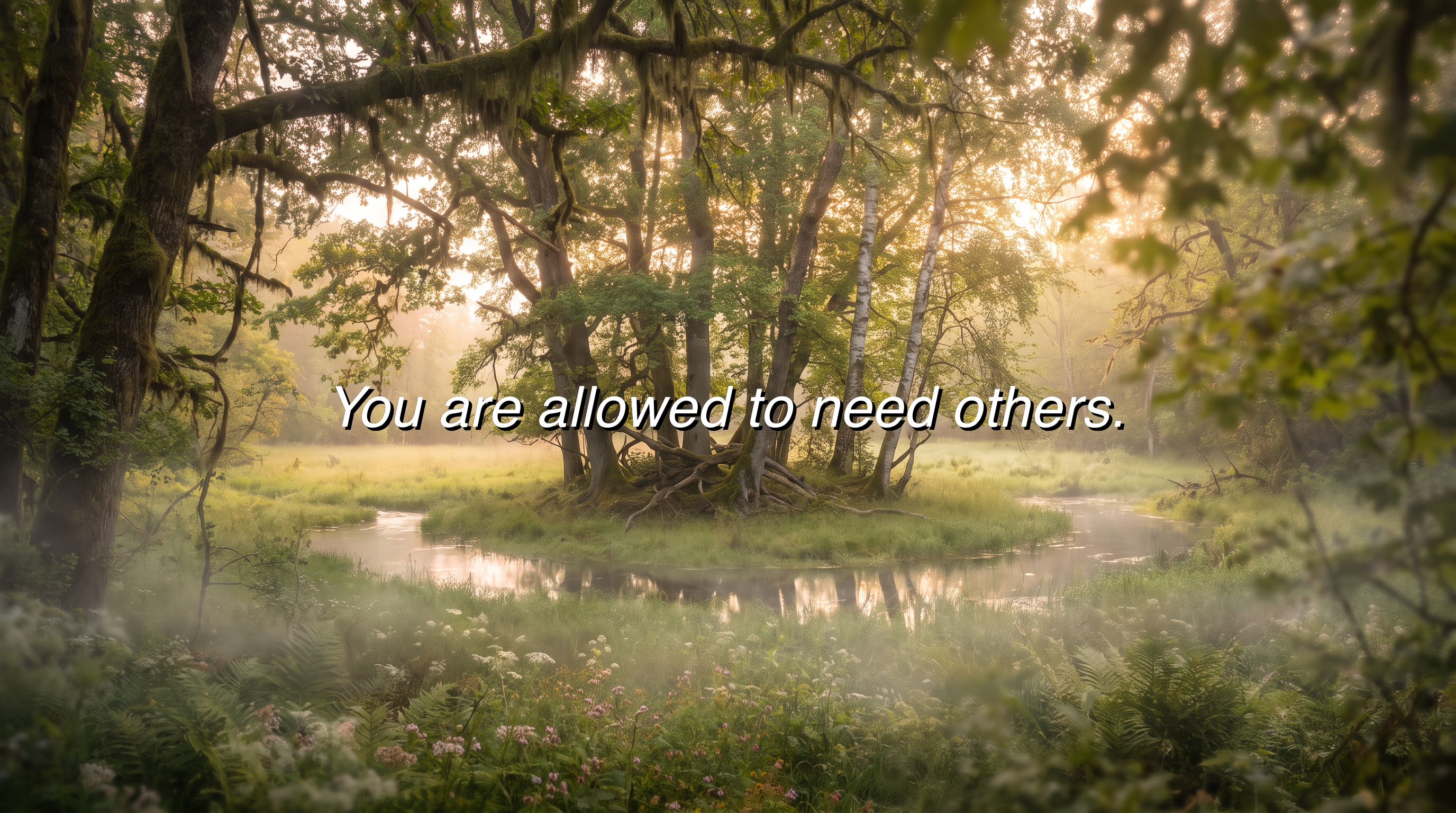
So today we remembered that no algorithm can offer what each other can — that we're built for community, not competition. When the likes go quiet and the metrics fade, it's real people who hold us. And that's worth leaning into.
What you just read is today's Daily Anchor, in full — a quote and a grounded reflection to sit with for a moment. Subscribe and the next one is waiting for you tomorrow morning, free, so you never have to remember to come find it. If today left you a little more present with the people who can actually hold you, that's exactly what this is for.
Send me the Daily Anchor →